The continuing adventures of the Winter family in Yonago, Tottori Prefecture, Japan
Showing posts with label food. Show all posts
Tuesday, May 22, 2012
Friday, May 4, 2012
Friday, February 3, 2012
New Year's Food, Osechi 御節, Chikuzeni 筑前煮, Toshikoshi Soba年越しそば
Here are some of the dishes Junko made for our special New Year's Feast.
There is chikuzeni 筑前煮, a stew with chicken, renkon(lotus root), carrots, mushrooms, and takenoko(bamboo shoots).
Osechi 御節 is a traitional New Year's platter usually made the day before and served on Ja 1st cold in pretty dishes. All the foos have some good luck meaning. Osechi takes a lot of cooking to prepare because there are so many small dises, but the idea is that housewives get a break from cooking on Jan. 1st. In reality, it's probably more work.
And of course, there's traditional soba noodles. These are eaten on New Year's Eve, for good luck. this is called Toshikoshi Soba年越しそば
| chikuzeni 筑前煮 |
| Osechi 御節 |
| Toshikoshi Soba年越しそば |
Hoshigaki(dried persimmons)柿 Daisuki
A few of the plethora of hoshigaki, dried persimmons from Junko's parents. I love these things, thick, sweet, and chewy. A little like the inside of a fig newton. This is one of the two main varieties of persimmons in Japan, the other kind being eaten fresh. These are picked and then strung up like a string of pearls to dry in the sun, a common sight on people's balconies in the autumn. The little tops would be a great hat for an acorn person craft. I much prefer these to the little winter oranges people eat while sitting under the kotatsu.
| hoshigaki |
| hoshigaki |
Monday, December 5, 2011
Japanese Persimmons, Kaki 柿
| hoshigaki, dried persimmons |
Saturday, October 22, 2011
Japanese Figs: ichijiku いちじく
Friday, September 2, 2011
そうめん Soumen noodles
そうめん, Soumen noodles are a common dish in Japan, especially in the summer. Soumen is a thin, white noodle. It's much thinner when compared to udon, ramen, or soba. Unlike ramen, which is served hot and with a strong tasting soup, soumen is often served cold and in a thin, light broth. We ate a lot of soumen this summer. Here's dinner the other night. Besides the broth, it's served with tuna, cucumber, egg, and a little nori (seaweed). My wife has a great artistic sense of food. She said it wasn't special. She's so modest. One popular way to eat it is "nagashi soumen". This is soumen served sliding down a bamboo half-pipe. You have to catch it with your chopsticks and then dip in your soup and eat. I did this once this summer at my school's Mt. Daisen camp. Great fun. They put a bucket at the end to catch anything you missed. Beat the heat with soumen!
Wednesday, August 24, 2011
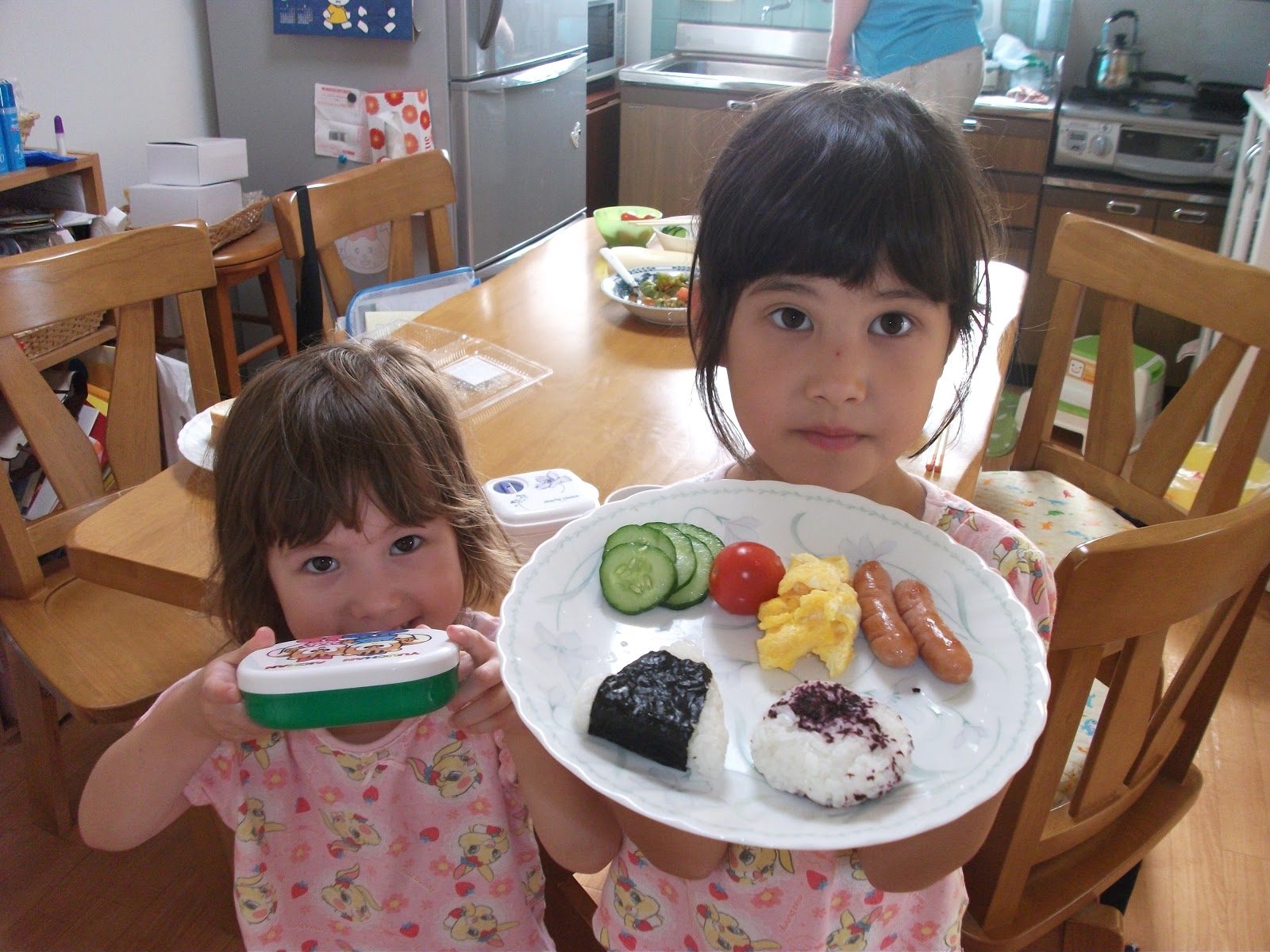
Hana's Breakfast 2
As part of Hana's Summer school homework, she had to cook breakfast a number of times and report to her teacher. Here's what she made the other day; rice, miso sop with potatoes and green onion, chikuwa, a kind of fish cake tube with cucumber inside, tomato, and sausages. Absolutely scrumptious! Great job Hana.
Sunday, August 21, 2011
Karintou manju
Manju is the generic name for a kind of traditional Japanese sweet. Manju is usually made with a sweet red or white bean paste, covered in a rice powder or breaded covering. Manju comes in an infinite variety of shapes and tastes. You're going to see a lot of manju on this list. This particular one is karintou manju. Karintou is the name of a different crunchy, breaded sweet and this manju has a similar taste. It took me a while to get to like manju. For westerners, it's not very sweet and the texture is little strange, but I love it now. This was a real good one.
Bota-mochi or Ohagi
Homemade Ice Cream in a can!
In preparation for a cooking lesson at my school, I made homemade ice cream for the first time. It was relatively easy an fun. It was adapted from a recipe I found online. It originally called for using two large coffee cans, a 1pound and 3 pound, but those are hard to come by in Japan. I used a small storage tin and a large tupperware cylinder. Here's the recipe:
Ingredients:
2 cups of light cream, half and half.(I used 1 cup cream and one cup milk)
1/2 cup of sugar
salt
ice
Directions:
1. Mix all the cream, sugar, and vanilla in the smaller can. Tape down the lid. (I placed Saran wrap over the opening of the can before putting the top on just to be extra sure)
2. Layer the large container with ice and salt. Put the smaller can inside. Fill with ice and salt. Put the top on and tape shut.
3. Roll or kick the container around, wrapped in a towel. or a plastic bag if you do it outside. Roll for 15 minutes, then check and refill ice and roll for another 15 minutes. It's probably going to leak a little bit. It gets a little messy inside. For round two we took it outside and kicked it around. Great fun.
It worked. We made vanilla ice cream that tasted great. The second time, I only used milk and added an egg from a different recipe. It didn't work quite as well, but not bad. I want to experiment more and I can't wait to try it with the kids at school.
Tofinek Carmel wafers by Tago
These are one of my all time favorite snacks in Japan. And guess what, they're made in Poland. These are thin, chewy, carmel wafers. Again, these import items come from local discount supermarket Lamu. According to the package, they're designed to be put on top of your cup of coffee to warm them and then dip. I just eat them out of the package. And at 28 yen (about 30 cents) a pop, they're pretty affordable, too. I love the taste, chewy, carmelly sweet. Great for a snack anytime. Check them out.
Thursday, August 11, 2011
Sunday, August 7, 2011
お供え Osonae Butsudan Sugar Flower Offerings
These are a pretty confection like decoration. They don't have a specific name but they might be called "obutsuzen" or お供え "osonae" which means offering. They are made of mostly sugar and come in many shapes and bright colors, usually flowers. They aren't just candy for kids, though. They are a common sight this time of year in August around Obon. They are an offering to be put on the butsudan or family buddhist alter in the home. They make me think of how in other Asian countries real flowers are placed on alters. For Obon, the departed spirits of the family come back to visit and people will put food, particularly sweets, cigarettes or alcohol on the busudan as an offering. After a certain period of time, they are taken down for the family to eat. It's said that food eaten from the butsudan has lost it's taste because the ancestors had their share. However, these sugar flower offerings are not eaten. I know this because after I bought these to take a picture, I took a bite. It wasn't very sweet and had a chalky taste. My saw it and couldn't believe it. She said she's never heard of anyone eating them. They are ceremonially burned with other religious paraphernalia after Obon. Oh well, you never know until you try.
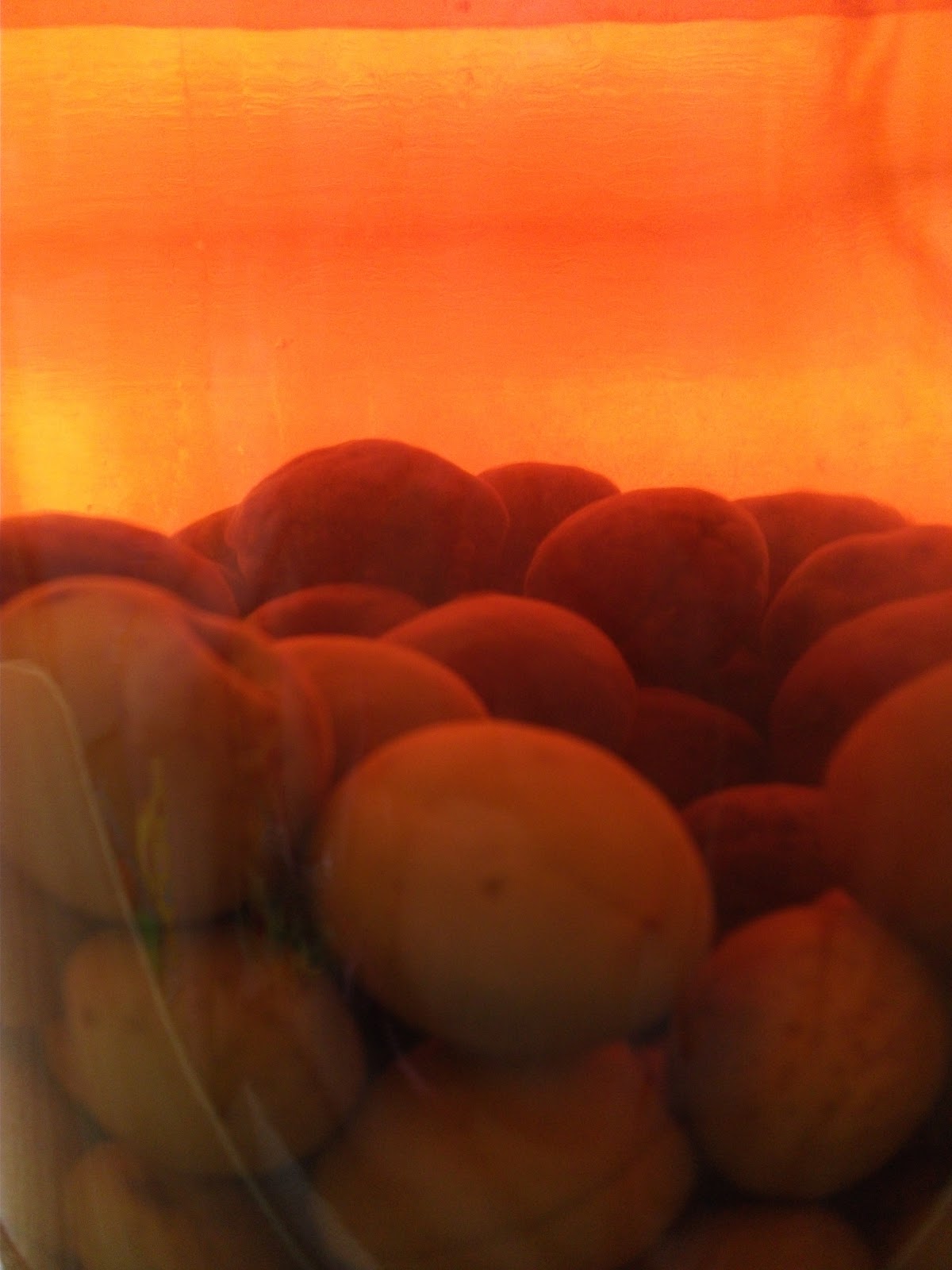
Umeshu
| Umeshu |
This is homemade umeshu(plum wine, sake). No, I'm not making moonshine. It's from Junko's parents. No, their not making it either. Many people mix umeshu at home. It's easy; just put a bunch of plums in a big container of shochu( a kind of strong Japanese sake) and add some Kori-zato( a kind of sugar). It's really sweet and good, but watch out, it can be deceptive. It doesn't taste so strong, so its easy to drink too much. I'm so thankful to Junko's parents for this treat every year. Speaking of moonshine, a friend of mine told me it's illegal to brew alcohol at home in Japan. My friend Marty in Kansas City brews beer. There go my dreams of my home distillery.
Saturday, August 6, 2011
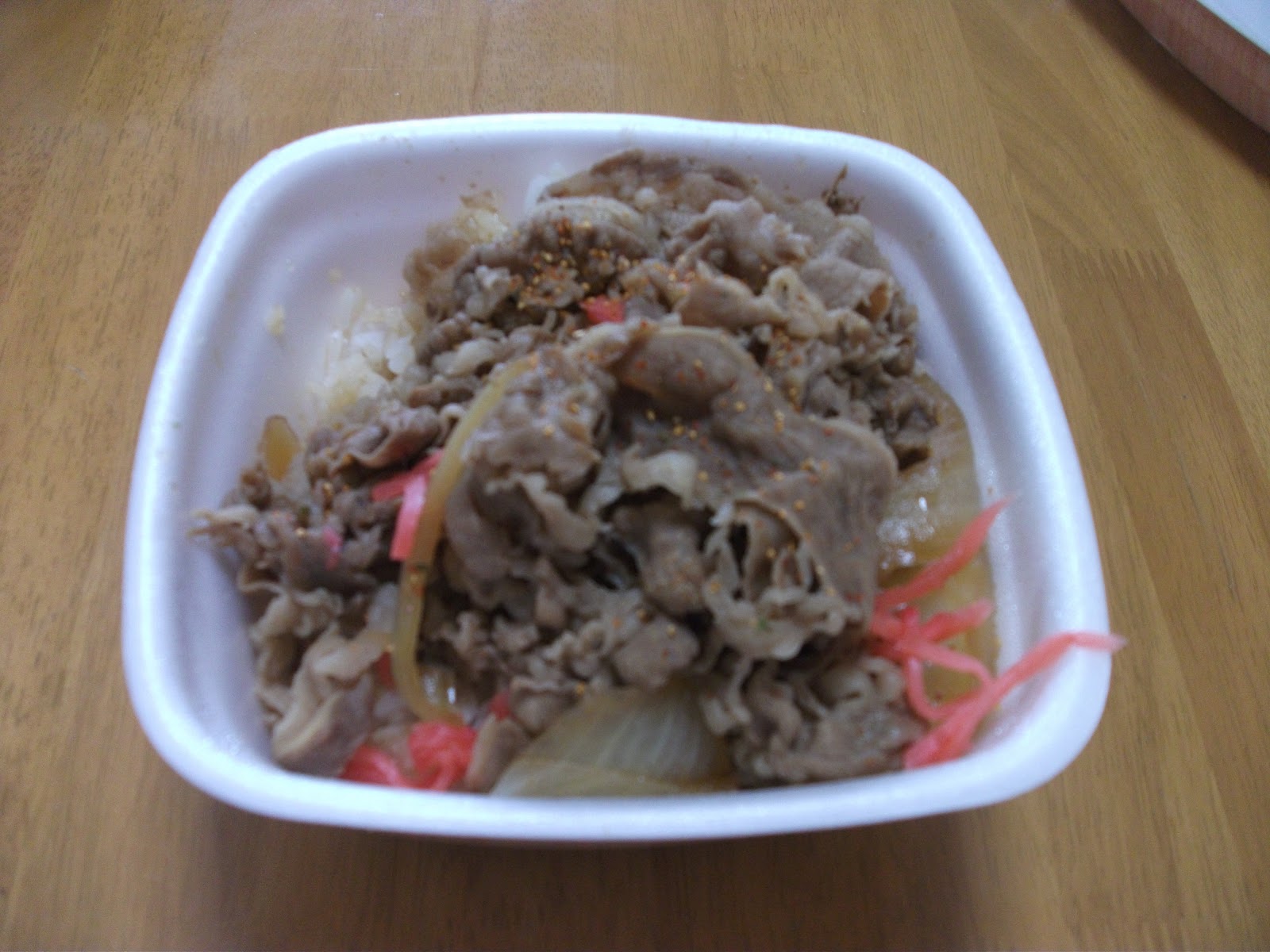
Gyudon, Beef Bowl
Here's today's lunch. Gyudon or beef bowl from Yoshinoya. Gyudon is typical Japanese fast food. It's sliced beef and onions on top of a bowl of rice. It's made with a lower quality grade of beef and most gyudon is cheap imported beef from America or Australia. In recentt years, there was a bit of a crisis for gyudon because of mad cow disease (BSE in Japan) and imports stopped for a time. The red stuff you see is a ginger pickles garnish. I also added a little red pepper from the packet included.
It was busy lunch time and we just got take out. There are different sizes; futsu-mori (regular size), O-mori (big size), and toku-mori (extra big). We got two futsu-mori and two toku-mori. Remember, we're taking about Japan, so their extra big is a small to average American size. I still had enough room to help Rika with hers. It was actually my first time to eat Yoshinoya. It was really good. I was impressed with Hana, though. She got the toku-mori. It took her a while, but she finished it off by herself. That's my girl.
Figs and Plums
Here's some fruit we had the other day. In Japanese ichijiku or figs and sumomo or Japanese plums. These came from Baba and Jiji's(Grandma and Grandpa) house. They have some fruit trees there. Figs are a popular fruit in Japan. I don't think I'd ever seen a fresh fig before in America. But I loved Fig Newtons. Grandma sometimes makes fig jam for us that is scrumptious. They say in Japan that if women eat a lot of figs, it'll make their breasts grow. Who doesn't need that? Junko's parents use the plums to make umeshu, or plum sake. We've got a bunch right now. It's deceptive. It's sweet, so it's easy to drink and before you know, you're snookered. The kids just love eating the yummy fruits from their grandparents.
Wednesday, August 3, 2011
NuCrema Chocolate Spread
This is one of my new favorite things in Japan. It's NuCrema chocolate, hazelnut spread. It's actually a product of Greece. Who'd've thought, at Lamu, the local discount grocery store, they'd have such a neat import item. I love the taste. It's thick and super sweet. To me, it's like chocolate frosting. Cake frosting is something I dearly miss in Japan. Most cakes here are made with whipped cream, but that hard crunchy frosting for cakes and cupcakes is nowhere to be found. I have a voracious sweetooth and this really satisfies my craving. The whole family puts it on toast in the morning. But when no ones's looking, I often stick a spoonful in my mouth like peanut butter, something which astonishes the Japanese. I really want to get a ready made white cake, but strawberry jam in the middle, then smear this chocolate spread all over the top for a chocolate cake. I let you know when I do.
Tuesday, July 26, 2011
Raymen and Croquette
Dinner tonight was ray-men, ramen-like egg noodles served cold with sliced tomato, cucumber and ham and with a white sesame sauce. It's tangy and has a great sesame taste. It's a favorite dish in the summer. Also Junko made croquette with leftover pumpkin and potato salad. It tasted great served with a little okonomiyaki sauce(like Worcester sauce). A road to a man's heart is through his stomach.
Ratatouille
Here's what Junko whipped up for breakfast with toast. Ratatouille is a french dish and sounds fancy, but is actuually quite simple. It's stewed summer vegetables; tomatoes, eggplant, and green pepper with some salt and pepper and cut up sausages. It has a tangy tomatoe and salty taste, delicious. Everytime I think of this dish it reminds me of the animated movie of the same name about the little mouse chef. That was a great movie, the kids loved. Please enjoy this simple taste of summer.
Subscribe to:
Posts (Atom)